

Culture history from the coast of Kianta Lake -tour
This culture historic tour will take you from Jalonniemi to Suomussalmi’s house museum. You can stop at eleven different sights along the way and get to know the culture history of Suomussalmi. There is also a bit information about the Winter War at Liekkipatsas and in Kirkonkylä. There are physical information boards along the way that include more information about the sights and their history. You can travel with a car, bike or even run. This article will get you started and introduce you to the stops. The tour is about 11 kilometers long from Jalonniemi to the house museum.
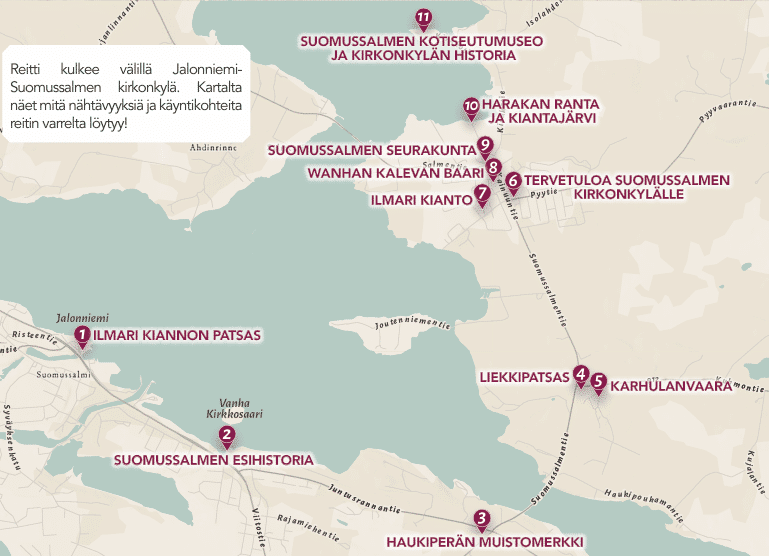
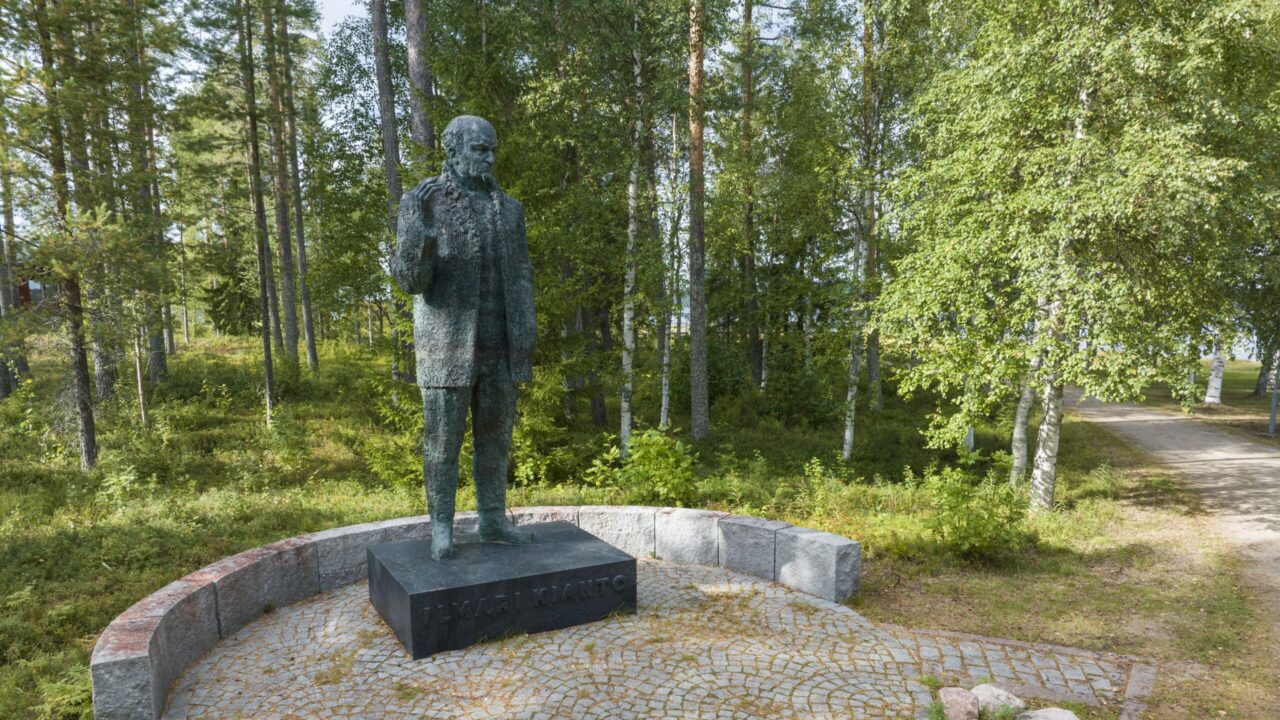
1. The statue of Ilmari Kianto
Ilmari Kianto was a known writer from Kainuu. He wrote about the people and nature of Kainuu. He wrote over 60 books during his life. Behind the Jalonniemi House you can find a statue of him, made by artist professor Kain Tapper. You can visit Ilmari Kianto’s home, Turjanlinna, through a cruise with Kianta-boat. The cruises run from Midsummer to the beginning of August.
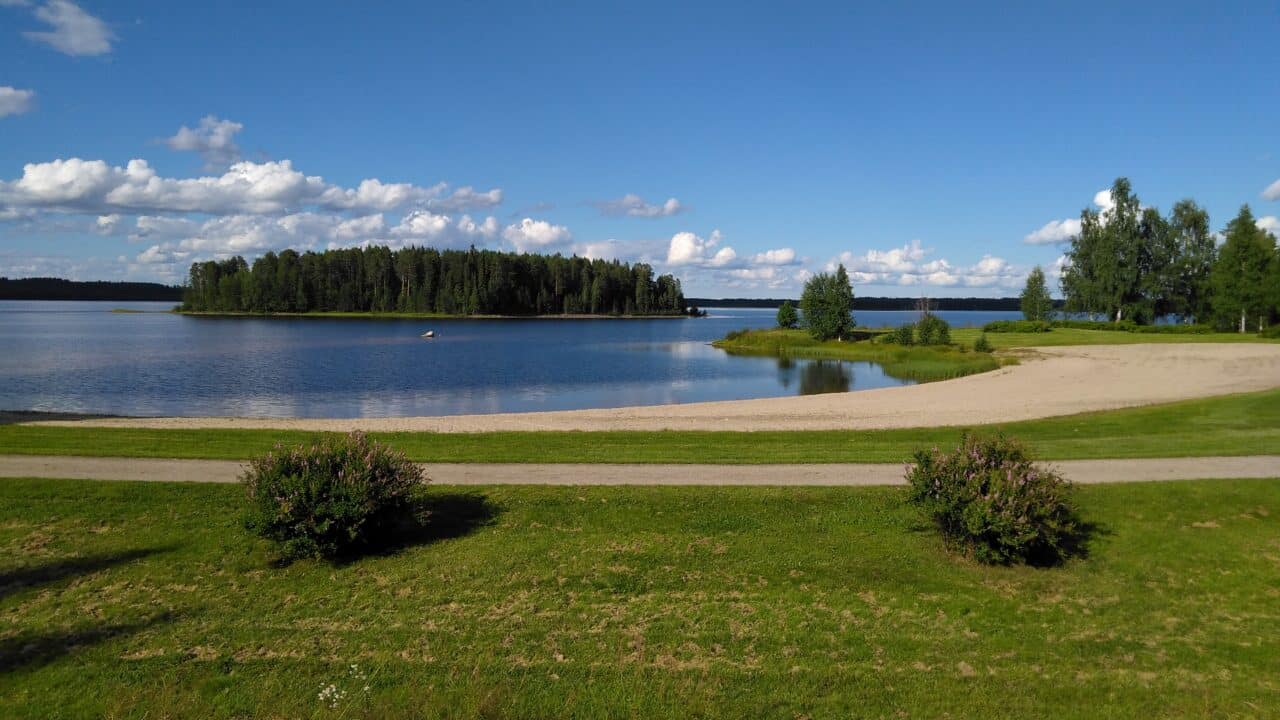
2. The prehistory of Suomussalmi
The first people who came to Suomussalmi settled to the park of Ruomasija after the ice age. On the opposite shore, there is a Church island, where has also been people living even 10 000 years ago. Due to the regulation of Lake Kiantajärvi, a significant number of prehistoric artifacts have been found throughout Suomussalmi. There is a prehistoric exhibition in Jalonniemi house where you can see archaeological artifacts.
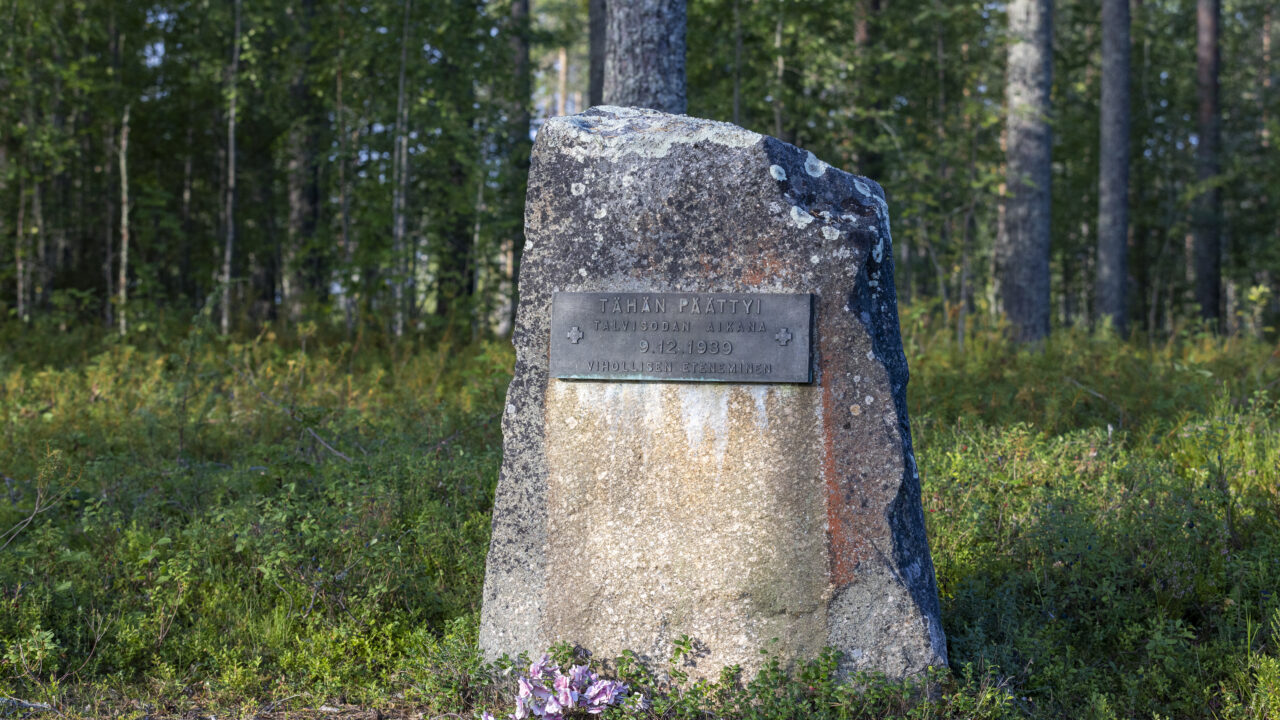
3. Monument of Haukiperä
There is a tile in the monument of Haukiperä that says: “Here ended the progress of the enemy 9.12.1939 during the Winter War”. The monument was revealed 30.5.1959.
The army of the Soviet Union attacked Suomussalmi from two different directions, from Juntusranta and Raate. The troups met each other in Kirkonkylä, where the Finns had burned down the buildings. The Finns had gathered at Haukiperä waiting for the enemy. The enemy attacked Haukiperä on December 9th, but Finns stopped the progression of the enemy. Fortunately for the Finns, the frozen lake still couldn’t support tanks or other heavy equipment, since at this point there weren’t any anti-tank weapons in use yet.
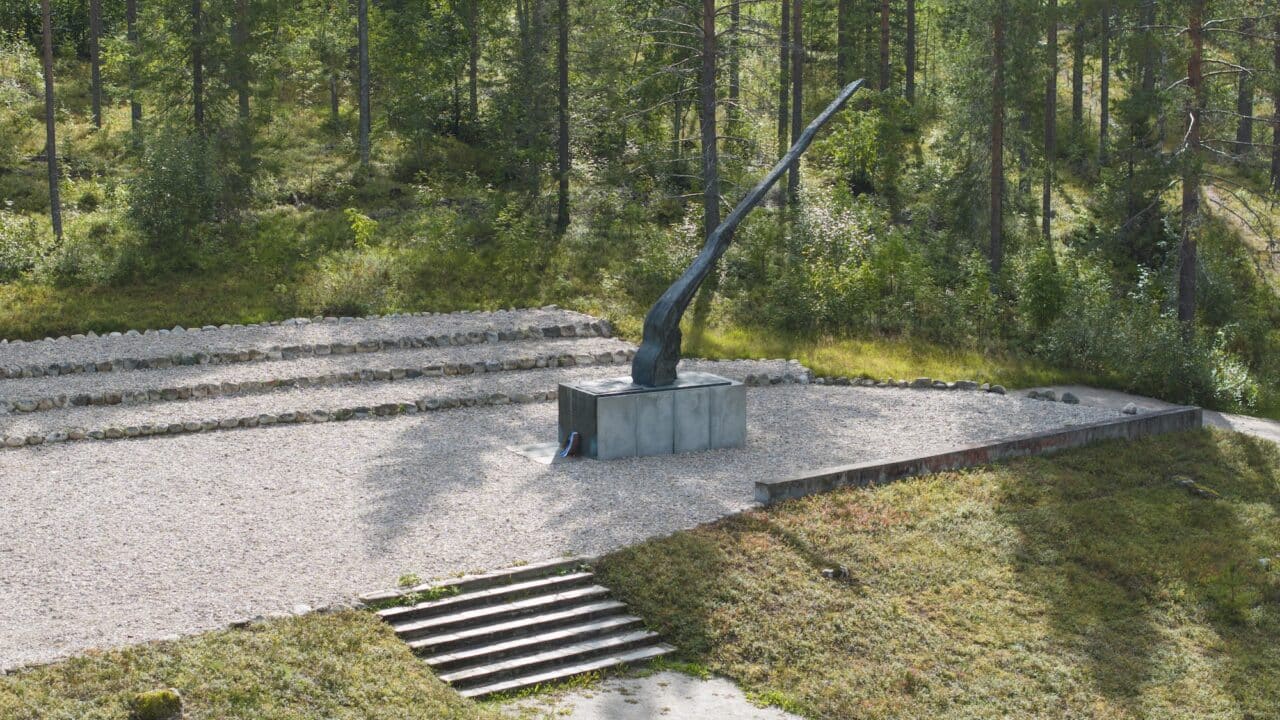
4. The Flame – a monument to the battles of Suomussalmi
The main memorial to the battles of Suomussalmi was unveiled on the occasion of the 20th anniversary of the battles on 30th August 1959 at a great patriotic folk festival. As many as 5 000 people took part in the unveiling, almost a third of them veterans. The monument is designed by Alvar Aalto.
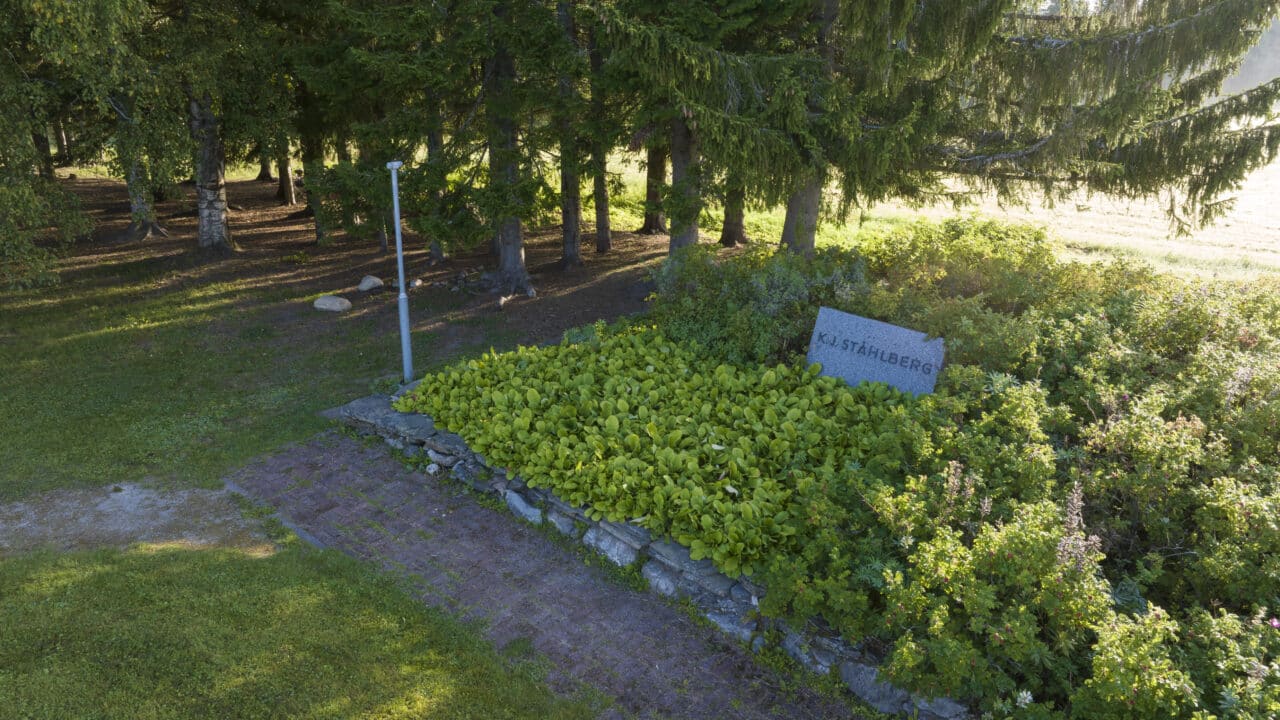
5. Karhulanvaara
There has been settlement in Karhulanvaara from the 18th century. Most of the buildings in Karhulanvaara destroyed during the Continuation War in 1944. Only the red tax warehouse that still stands in the place survived.
The Memorial of the first president of Finland is located in Karhulanvaara, on the yard of the school of Karhulanvaara, on the same spot where the old vicarage had been. The first president of Finland, Kaarlo Juho Ståhlberg, was born in this vicarage on January 28th 1865.
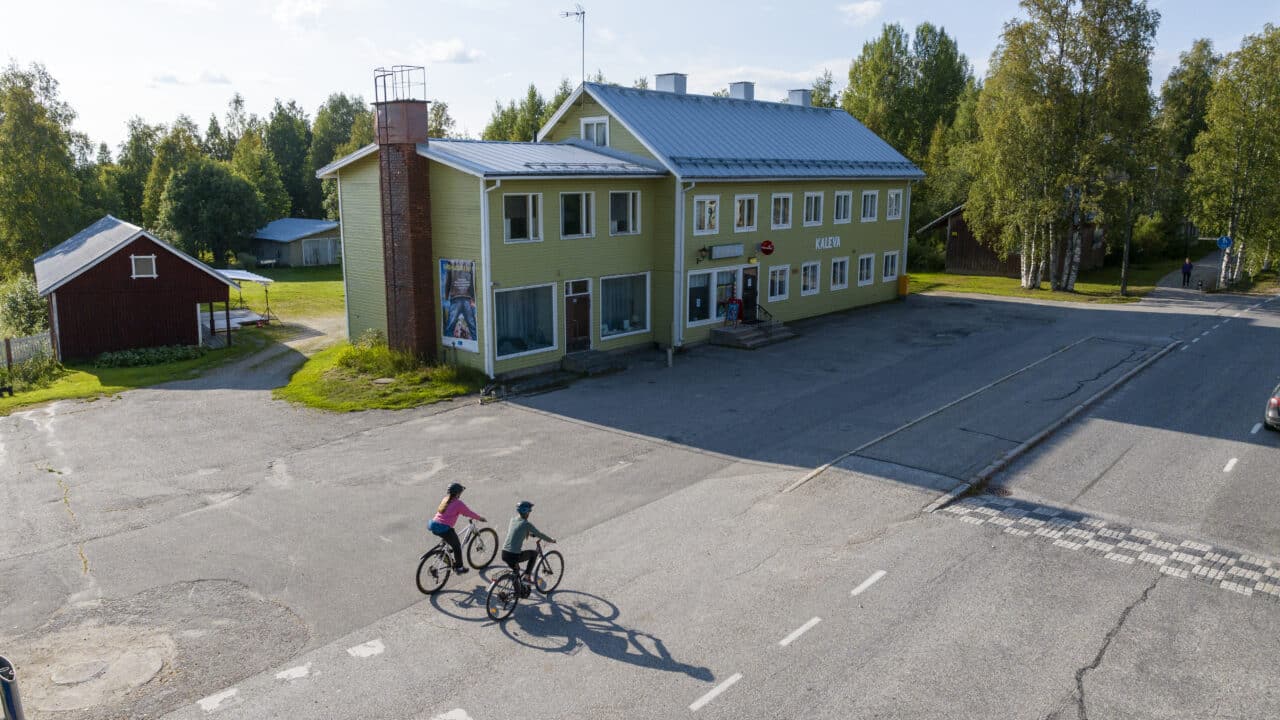
6. Welcome to Kirkonkylä
Suomussalmi’s Kirkonkylä was the city centre until the Winter War. Kirkonkylä was destroyed almost fully during December 1939 in the battles of Winter War. Thus the city centre decided to relocate to Ämmänsaari, to the west coast of Kianta lake.
The name Ämmänsaari was changed to Suomussalmi in the late 1990s, but the name Ämmänsaari is still used as well, especially by locals.
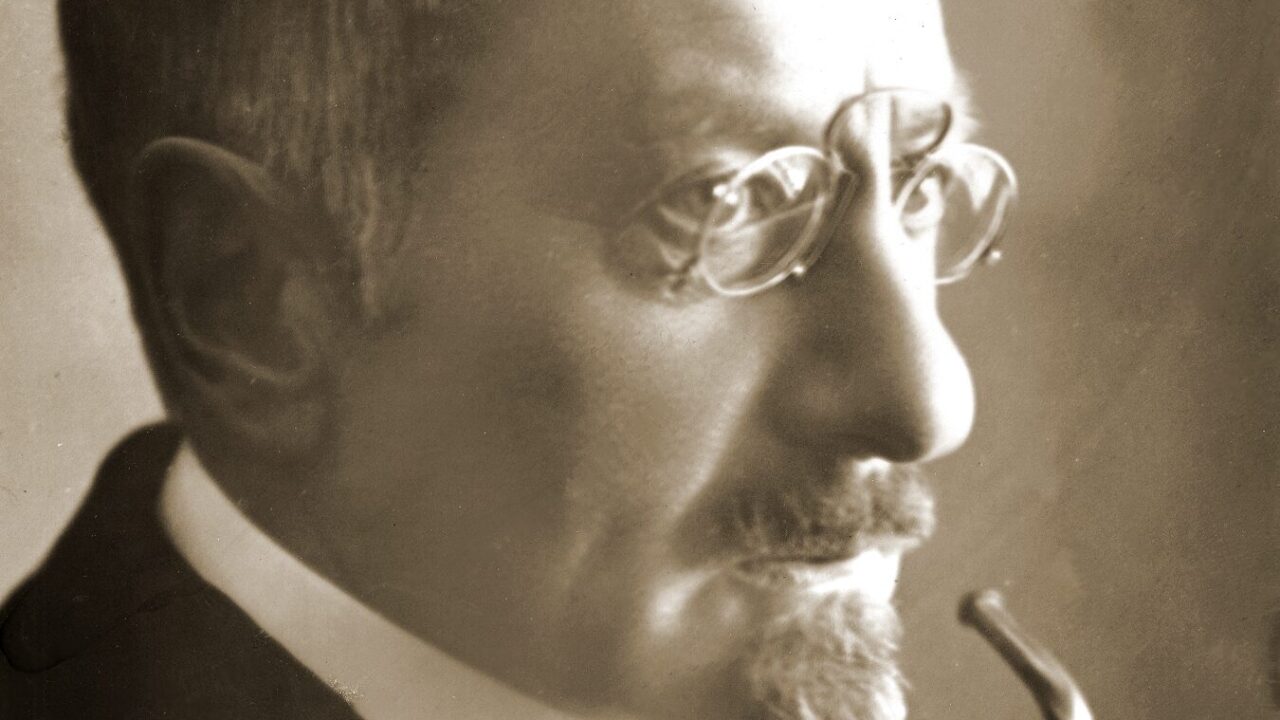
7. Ilmari Kianto
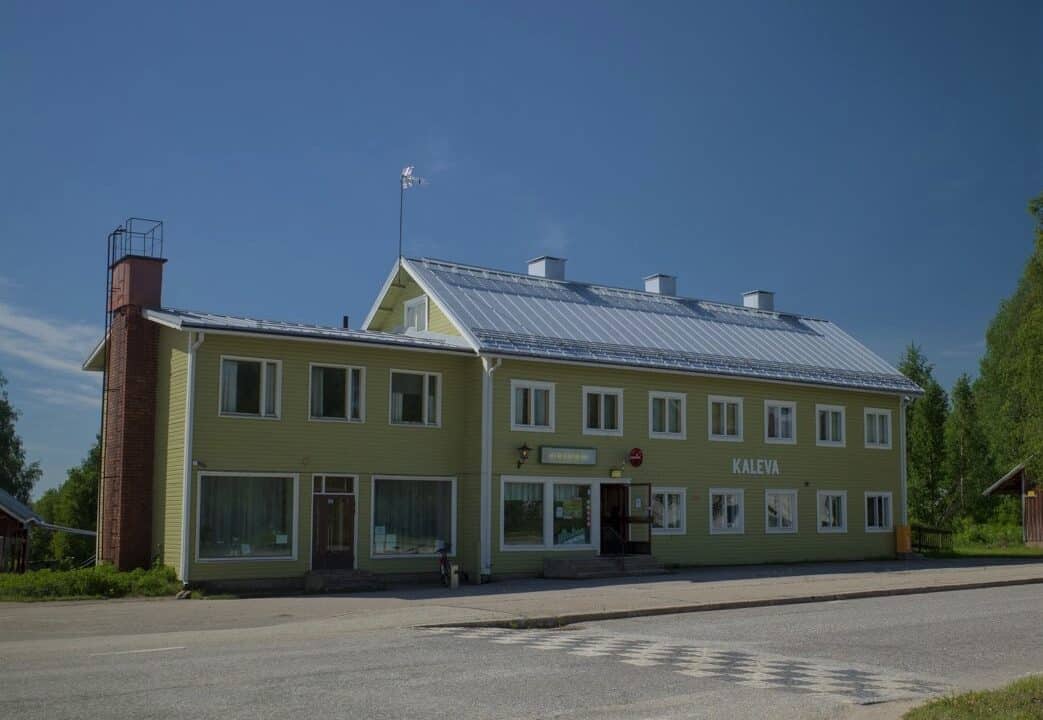
Kianto spent a lot of time in Kirkonkylä, and one of his usual spots was the Bar-Cafe Wanha Kaleva, former guesthouse. Kianto and the owner of Kaleva shared an unique relationship. Kianto wrote about the places and people of Kirkonkylä in his books.
8. Bar-Café Wanha Kaleva
Bar-Café Wanha Kaleva was founded in 1928 as a guesthouse and a cafe. The owners had to evacue during the Winter War, but luckily the house survived the war. After the war the house functioned as a bakery and a cafe during the Continuation War. Still this day you can enjoy coffee or beverages at Kaleva and from time to time get to enjoy live music there.
9. Congregation of Suomussalmi
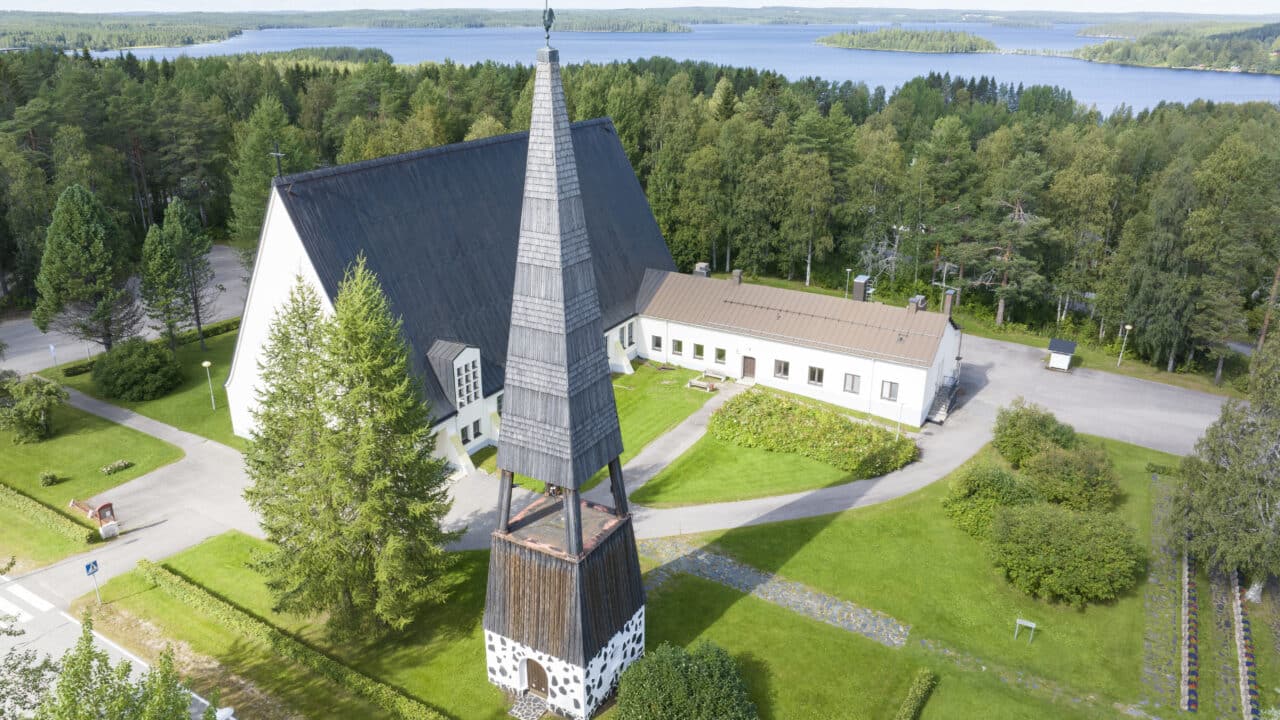
The first church of Suomussalmi was located in Kirkkoniemi. The church got destroyed in the Winter War 19.12.1939. The church’s stone foundation and a memorial can be seen at the old site. The new church was build next to the heroes’ cemetery in Kirkonkylä. The church was put into use in 1950 and it is designed by the architect Onni Johannes Ermala. The belfry was built at the same time next to the church, and there is a rooster “sitting” on it, it is a symbol of wakefulness.
In the information board located near to the church is told history abot the congregation of Suomussalmi.
10. Kianta Lake and Harakka shore
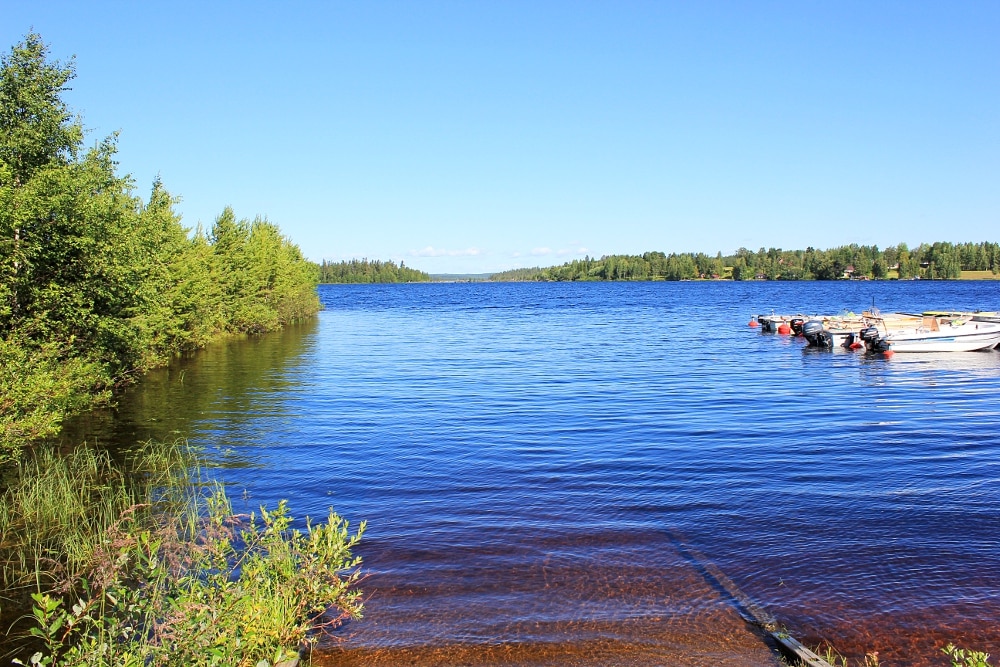
Kianta Lake is the biggest lake in Suomussalmi with 191 square kilometers. Several prehistoric finds, such as Stone Age dwelling sites, have been made on the shores of the lake. There isn’t a clear explanation for the name of the lake, but there has been estimations that the name comes from a language spoken around the area before Saame. Kianta lake has been an important part of Suomussalmi’s industry: the lake has been utilized for timber floating, transport of tar barrels, and the extraction of iron ore.
The Harakkala house, one of the few houses in the village center that survived the Winter War, is located on the Harakka shore. Harakkala house’s householder, “Harakka-Antti”, was a versatile entrepreneuer. He for example practiced shipping on the lake, run a circular saw, and grinded grain for the villagers with the mill. He was also active regards societal issues. One of his most interesting projects was electrifying the village during the years 1918-1919.
11. Suomussalmi House Museum
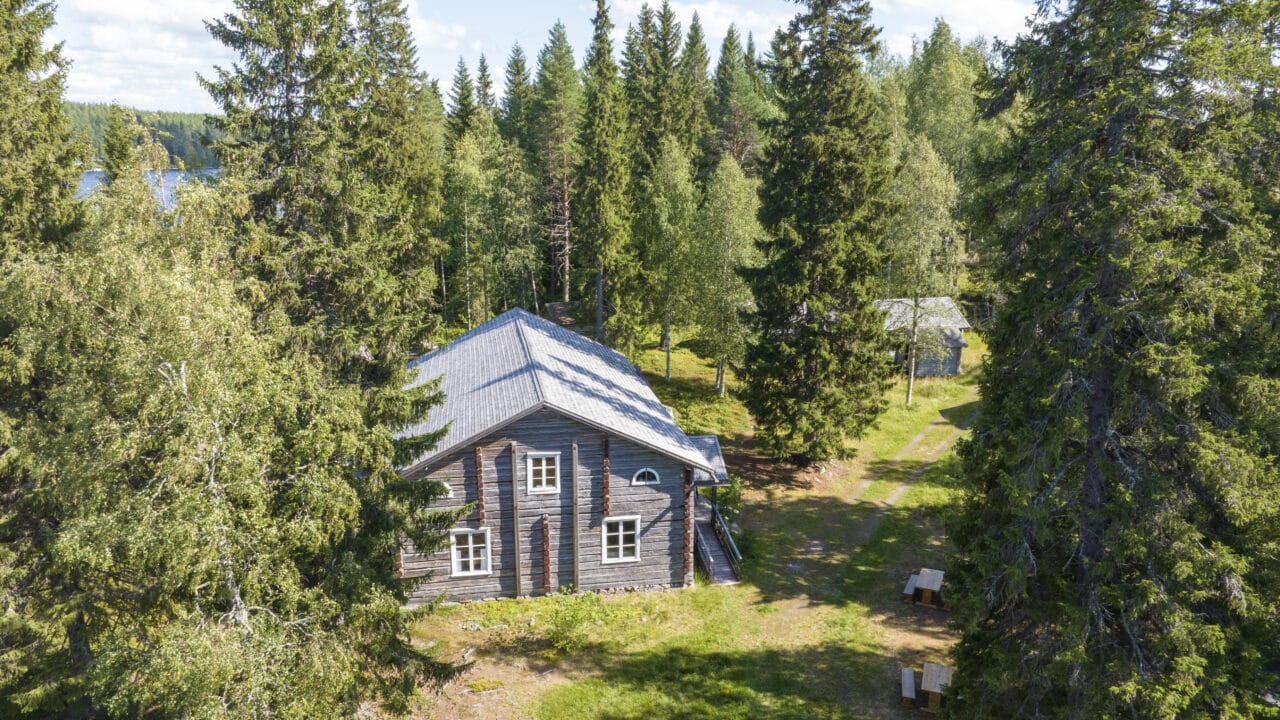
This culture historic tour ends in the Suomussalmi House Museum. The House Museum located in Kirkkoniemi, where the first church of Suomussalmi was. In 1764 the king of Sweden gave an order to build a church in Suomussalmi. Kirkkoniemi was considered as most suitable place, as people get there with a boat from almost every direction.
Today there is the House Museum of Suomussalmi. The collection of objects and milieu mirrors the life in Kainuu in 19th and 20th centuries. The log buildings have been brought from different locations around the municipality. The Museum is open in the Summer season and the entry is free.